
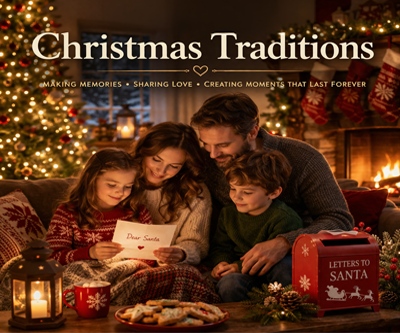
Discover how meaningful holiday rituals, Santa traditions, and simple family moments create lasting Christmas memories filled with warmth, wonder, and love.
Christmas is often remembered as one of the most magical times of the year, but the true heart of that magic usually comes from something deeper than gifts and decorations. While sparkling lights, wrapped presents, and festive music help set the scene, it is the emotional traditions of Christmas that give the season its lasting meaning. These are the moments that make people feel connected, loved, and part of something special.
Emotional Christmas traditions are the rituals that families return to year after year because of how they make everyone feel. They are the moments that create warmth, comfort, anticipation, and joy. They may be simple, but they often become the memories children carry with them for life. A child may not remember every toy they received, but they often remember sitting by the tree with family, baking cookies for Santa, reading a favorite Christmas story, or opening a letter from the North Pole.
These traditions matter because they shape the emotional experience of Christmas. They turn the holiday into more than a date on the calendar. They create the feeling of Christmas, and that feeling is what people treasure long after the season is over.
What Are Emotional Christmas Traditions?
Emotional Christmas traditions are the holiday rituals that bring meaning and connection to the season. They do not need to be expensive or elaborate. In fact, the most powerful traditions are often the simplest. What matters most is the emotional impact they create and the consistency with which families return to them.
These traditions may include decorating the Christmas tree together, leaving cookies out for Santa Claus, watching the same Christmas movie every year, reading a holiday bedtime story, writing letters to Santa, or opening a special ornament box filled with family memories. Each of these activities becomes more powerful over time because it is repeated and shared.
The repetition is important because it creates comfort and anticipation. Children begin to look forward to these moments and connect them with the safety, warmth, and excitement of Christmas. That emotional pattern helps shape how they experience the holiday every year.
Why Emotional Christmas Traditions Matter So Much
One of the biggest reasons emotional traditions matter is that they create a sense of belonging. Christmas can be busy and overwhelming, but traditions bring people back to what matters most: family, connection, and shared meaning. When families repeat the same rituals each year, they create a sense of stability that children especially value.
These traditions also build emotional memory. A child may not remember every detail of a holiday season, but they often remember how it felt. They remember feeling excited while hanging ornaments, safe while listening to Christmas stories, and joyful while waiting for Santa. These emotional memories often become more important than material gifts because they stay vivid over time.
For adults, emotional traditions provide something meaningful as well. They offer a way to slow down, reconnect with loved ones, and relive the wonder of Christmas through the eyes of children. Many parents discover that the traditions they create for their children become just as meaningful to them as they are to the kids.
The Role of Santa Claus in Emotional Christmas Traditions
Santa Claus plays a powerful role in many of the most emotional Christmas traditions. He represents wonder, generosity, kindness, and belief. Because of that, Santa-centered traditions often become some of the most memorable parts of the season.
Children who write letters to Santa Claus, leave cookies out on Christmas Eve, or receive a personalized message from the North Pole often feel a deep emotional connection to the holiday. Santa gives children a way to participate in Christmas magic personally. He turns the season into a story they can step into, rather than something they simply observe.
Receiving a letter from Santa can be especially meaningful. It makes the magic of Christmas feel real and personal. It tells children that Santa knows their name, sees their kindness, and has taken time to write to them. That emotional connection can make the season feel even more magical and unforgettable.
Simple Christmas Traditions Often Have the Deepest Meaning
One of the most beautiful things about emotional Christmas traditions is that they do not have to be complicated. In many cases, the simplest rituals are the ones that mean the most. A cup of hot cocoa by the tree, a handwritten letter to Santa, a favorite family recipe baked together, or a quiet Christmas Eve story can leave a stronger impression than something large or expensive.
This is because emotional traditions are about presence and feeling, not performance. They work because they bring people together in a genuine way. They create a shared experience that feels warm, familiar, and meaningful. For children, those moments become part of what Christmas feels like. For adults, they often become cherished reminders of what the season is really about.
In a world where holidays can sometimes feel rushed or focused too much on shopping, simple traditions bring the heart back into Christmas. They remind families that magic often lives in the quietest moments.
How Emotional Christmas Traditions Shape Childhood Memories
Many childhood Christmas memories are built on tradition rather than presents. Children often remember the atmosphere of the season, the excitement of shared rituals, and the emotional comfort of familiar routines. These experiences help shape how they understand love, family, and celebration.
When a child experiences emotional Christmas traditions year after year, they begin to associate the season with warmth, connection, and joy. That emotional imprint can last a lifetime. As they grow older, they may remember the way the house smelled while cookies baked, the excitement of checking the mailbox for a Santa letter, or the comfort of hearing the same Christmas story read aloud every year.
These memories often become part of a child’s identity. They help define what Christmas means and why it matters. That is why traditions carry so much power. They create not just moments, but emotional foundations.
Passing Christmas Traditions From One Generation to the Next
One of the most meaningful aspects of emotional Christmas traditions is how they are passed down. A tradition that begins in one family can continue for generations, growing richer and more meaningful over time. Parents recreate traditions from their own childhood or create new ones that their children will one day carry forward.
This passing down of traditions gives Christmas a powerful sense of continuity. It connects grandparents, parents, and children through shared rituals and memories. A child who receives a letter from Santa today may grow up and one day create the same magical experience for their own children.
That is how Christmas wonder survives through time. It is not only preserved in stories, but in traditions repeated with love year after year. Emotional Christmas traditions become part of a family’s history and legacy.
Why Emotional Traditions Matter More Than Gifts
Gifts are an exciting part of Christmas, but they are not always the part people remember most. Many presents are enjoyed for a while and then forgotten. Emotional traditions are different because they create lasting experiences. They become stories families tell, memories they revisit, and feelings they carry long after the decorations are gone.
This does not mean gifts are unimportant. It means that gifts are often most meaningful when they are surrounded by emotional connection. A Christmas filled only with things may feel exciting for a moment, but a Christmas filled with traditions feels lasting and full of heart.
For many families, this is why they focus on creating experiences that bring people together. Emotional Christmas traditions help children understand that the holiday is about more than receiving. It is about being together, sharing joy, and making memories that stay with them for years.
Final Thoughts on Emotional Christmas Traditions
Emotional Christmas traditions are the true heart of the holiday season. They are the rituals that turn Christmas into something warm, personal, and unforgettable. Whether it is writing letters to Santa, reading a favorite story, baking together, or sharing quiet moments by the tree, these traditions create the emotional memories that last.
What makes Christmas meaningful is often not how much is spent or how elaborate the celebrations are. It is the feeling of togetherness, the comfort of familiar rituals, and the joy of creating moments that matter. These traditions help children feel secure, loved, and connected. They help adults rediscover wonder and pass that wonder on.
That is why emotional Christmas traditions matter so much. They remind families that the most valuable part of Christmas is not something you buy. It is something you create together, year after year, with love.